
Advin COVID-19 Antigen Test Home Instructions
- June 10, 2024
- Advin
Table of Contents
- Intended Use
- Principle of The Test
- Storage and Stability
- Materials provided
- Quality Control
- Test Procedures
- Result Interpretation
- Warning, Precautions and Safety Information
- Limitations
- Analytical Performance
- Clinical Evaluation
- Technical Support
- Symbols
- References
- Read User Manual Online (PDF format)
- Download This Manual (PDF format)
Advin COVID-19 Antigen Test Home Instructions

For FDA Emergency Use Authorization (EUA) only.
-
For more information on EUAs please visit:
https://www.fda.gov/emergency-preparedness-andresponse/mcm-legal-regulatory- andpolicy-framework/emergency-useauthorization -
For the most up to date information on COVID-19, please visit: www.cdc.gov/COVID19
Intended Use
The Advin COVID-19 Antigen Test @ Home is a lateral flow immunoassay device intended for the qualitative detection of nucleocapsid protein antigens from SARS-CoV-2.
This test is authorized for non-prescription home use with self-collected anterior nasal (nares) swab samples from individuals aged 14 years or older or with adult-collected anterior nasal (nares) samples from individuals aged 2 years or older. This test is authorized for individuals with symptoms of COVID19 within the first 7 days of symptom onset when tested at least twice over three days with at least 48 hours between tests, and for individuals without symptoms or other epidemiological reasons to suspect COVID-19, when tested at least three times over five days with at least 48 hours between tests.
The Advin COVID-19 Antigen Test @Home does not differentiate between SARS-CoV and SARS-CoV2.
Results are for the identification of SARS-CoV-2 nucleocapsid protein antigen, which is generally detectable in anterior nasal (nares) swab samples during the acute phase of infection. Positive results indicate the presence of viral antigens, but clinical correlation with past medical history and other diagnostic information is necessary to determine infection status. Positive results do not rule out bacterial infection or co-infection with other viruses and the agent detected may not be the definite cause of disease. Individuals who test positive with the Advin COVID-19 Antigen Test @ Home should self- isolate and seek follow-up care with their physician or healthcare provider as additional testing may be necessary.
Results are for the identification of SARS-CoV-2 nucleocapsid protein antigen, which is generally detectable in anterior nasal (nares) swab samples during the acute phase of infection. Positive results indicate the presence of viral antigens, but clinical correlation with past medical history and other diagnostic information is necessary to determine infection status. Positive results do not rule out bacterial infection or co-infection with other viruses and the agent detected may not be the definite cause of disease. Individuals who test positive with the Advin COVID-19 Antigen Test @ Home should self- isolate and seek follow-up care with their physician or healthcare provider as additional testing may be necessary.
Individuals who test negative and continue to experience COVID-19 like symptoms of fever, cough and/or shortness of breath may still have SARS-CoV-2 infection and should seek follow up care with their physician or healthcare provider.
Individuals should provide all results obtained with this product to their healthcare provider for public health reporting and to receive appropriate medical care. All healthcare providers will report all test results they receive from individuals who use the authorized product to relevant public health authorities in accordance with local, state, and federal requirements using appropriate LOINC and SNOMED codes, as defined by the Laboratory In Vitro Diagnostics (LIVD) Test Code Mapping for SARSCoV-2 Tests provided by the CDC.
The Advin COVID-19 Antigen Test @ Home is intended for non-prescription self- use and/or, as applicable for an adult lay user testing another person aged 2 years or older in a non-laboratory setting.
The Advin COVID-19 Antigen Test @ Home is only for use under the Food and Drug Administration’s Emergency Use Authorization. This product has not been FDA cleared or approved.
Principle of The Test
COVID-19 (short for ‘Coronavirus Disease 2019’) is a disease first recognized in 2019 that is caused by a type of novel coronavirus called SARS-CoV-2. Due to its rapid spread, the World Health Organization (WHO) recognized the disease as a global pandemic on March 11, 2020. Individuals infected with SARS-CoV-2 may have a range of symptoms from asymptomatic infection to severe respiratory illness and even death. The virus is spread primarily from person to person through respiratory particles, even by individuals without symptoms.
The Advin COVID-19 Antigen Test @Home is a qualitative, lateral flow
immunochromatographic assay test. The Advin COVID-19 Antigen Test @Home is
designed to detect nucleocapsid (N) protein from the SARS-CoV-2 in anterior
nasal swab specimens. The test line region of the membrane is coated with an
antibody specific to the nucleocapsid protein of SARS-CoV-2. The label pad
contains a
secondary anti-SARS-CoV-2 antibodies against the nucleocapsid protein of SARS-
CoV-2, which is conjugated with color particles. In the presence at or above
the limit of detection, SARS-CoV-2 viral antigens will react with the antibody
conjugate complexes in the label pad, migrate along the strip, and then
captured by the specific anti-SARS-CoV-2 antibodies coated on the test line
region. The Advin COVID-19 Antigen Test @Home is validated for use from direct
specimens testing without transport media.
Anterior nasal swab samples will be self-collected by individuals aged 14 and older or collected by parent or guardian if the patients aged between 2 to 14. The anterior nasal swab will be eluted with buffer and the extracted solution will be added into the test cassette sample well. The extracted solution contained the SARS-COV-2 viral antigen (if there is any) will react with the specific anti-SARSCoV-2 nucleocapsid protein antibodies conjugated to particles and migrate through the test strip. If SARS-COV-2 viral antigen is present, the test line on the nitrocellulose membrane will generate a color line in test line region.
Storage and Stability
Store the Advin COVID-19 Antigen Test @Home test kit between 2 to 30℃ (35.6 to 86°F) in a place out of direct sunlight and out of reach of children. Kit components in the Advin COVID-19 Antigen Test @Home are stable until the expiration date printed on the external packaging. The test must remain in the sealed pouch until use. DO NOT FREEZE.
Due to potential for test failure at high temperature and high humidity, the Test Device must remain in the sealed foil pouch until use. Once the pouch has been opened, the test device should be used within 60 minutes. Use beyond one hour may not produce accurate results.
Materials provided
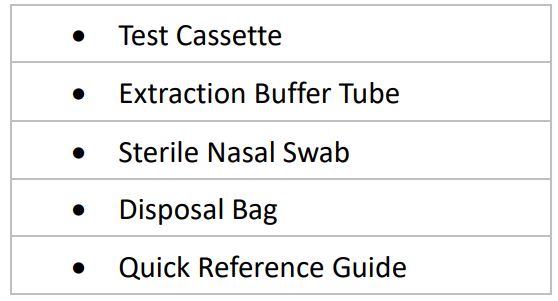
*Note: This test comes in a 1 test, 2 tests, 5 tests or 25 tests quantity. The number of items supplied in the kit will vary depending on which kit is purchased.
**Materials Required but Not Provided: Timer
Quality Control
Each Advin COVID-19 Antigen Test @Home has a built-in internal procedural
control. The red line appearing at the “C” position is an internal procedural
control. This procedural control line indicates that sufficient flow has
occurred. A distinct red Control line should always appear if the test has
been performed correctly. If the Control line does not appear, the test result
is invalid, and a new test should be performed using a new sample and new test
kit.
External run controls are not required to use the Advin COVID-19 Antigen Test
@Home in a home setting.
Test Procedures
-
Bring test kit to room temperature (59-86 °F / 15-30 °C). Read the instructions before starting the test procedure. Check expiration date printed on test.
For information about current expiration dates for at-home OTC COVID-19 diagnostic tests, visit AtHome OTC COVID-19 Diagnostic Tests: https://www.fda.gov/medical-devices/coronavirus-covid-19-and-medical-devices /home-otc-covid-19-diagnostic-tests. -
Wash or sanitize your hands and keep them dry before testing.
-
Peel off the aluminum foil on the extraction buffer tube.
-
Place the extraction buffer tube in the hole on the kit box.
-
Remove nasal swab from its packaging. DO NOT touch the swab tip.
-
Prepare to collect sample. If collecting from a child, you may need another person to steady the child’s head while swabbing.
Warning: Wear a face mask if swabbing others. -
Gently insert swab ½ – ¾ inch into first nostril, or until you feel resistance.
Slowly make at least 5 rotations with the swab firmly against the walls of the nostril for approximately 15 seconds. -
Repeat step #7 in your second nostril using the same swab.
Warning: DO NOT insert the swab any deeper if you feel resistance or pain. -
Take the tube out of the tube holder. Place the swab into the tube, ensure the swab tip is in the liquid inside the tube.
Stir the swab tip against the bottom and side of the tube for at least 15 times.
Warning: Inaccurate test results may occur if the nasal swab specimen is not properly collected.
-
Squeeze the swab tip at least 5 times from outside of the tube while the swab tip remains in the liquid.
-
While squeezing the sides of the vial firmly, pull the swab out to remove excess liquid.
Dispose of the swab in provided disposal bag. -
Firmly press the dropper tip on the extraction buffer tube.
-
Remove the cassette from its packaging and place it on a clean flat surface. Find the Result Window and Specimen Well on the cassette.
-
Add 3 drops of solution into the circular sample well, labeled as “S” on the test cassette.
Warning:
Do NOT add test sample to the rectangular results window.
Do NOT touch the sample well with dropper tip.
Do NOT hold the dropper tube more than ¼ inch above sample well.
Adding other than the recommended number of drops may result in inaccurate results. -
Set timer for 10 minutes. Do not move or lift the test cassette. Read the test result at 10 minutes.
Warning: Do NOT read the result before 10 minutes or after 30 minutes.
Interpretate the test result per the IFU section “Result Interpretation (below)”.
Repeat testing is needed to improve test accuracy. Please follow the table below when interpreting test results for COVID-19. -
Dispose of all used test kit components in the Disposal Bag provided. Dispose the bag in household trash. Wash your hands or use hand sanitizer after completing all steps.
Result Interpretation
Repeat testing is needed to improve test accuracy. Please follow the table below when interpreting test results for COVID-19.

Results should be considered in the context of an individual’s recent
exposures, history, and the presence of clinical signs and symptoms consistent
with COVID-19.
Results should not be read before 10 minutes or after 30 minutes.
Inaccurate test interpretations may occur.
Look at the result window and locate the letters C and T on the side of the
window. A red line should always appear at the C position; this is a control
line and signals that the test is working properly.
COVID-19 Positive (+)
If the Control (C) line and the Test (T) line are visible, the test is positive. Any faint visible red/purple test (T) line with the control line (C) should be read as positive.
You do not need to perform repeat testing if you have a positive result at any time.
A positive test result means that the virus that causes COVID-19 was detected in your sample and it is very likely you have COVID-19 and are contagious. Please contact your doctor/primary care physician or your local health authority immediately and adhere to the local guidelines regarding selfisolation. There is a very small chance that this test can give a positive result that is incorrect (a false positive).
Positive results do not rule out bacterial infection or co-infection with other viruses. The agent detected may not be the definite cause of disease. Individuals who test positive with the Advin COVID19 Antigen Test@Home should self-isolate and seek follow up care with their physician or healthcare provider as additional confirmatory testing with a molecular test for positive results may also be necessary, if there is a low likelihood of COVID-19, such as in individuals without known exposures to COVID-19 or residing in communities with low prevalence of infection.
COVID-19 Negative (-)
If the Control (C) line is visible, but the Test (T) line is not visible, the test is negative.
To increase the chance that the negative result for COVID-19 is accurate, you should:
- Test again in 48 hours if you have symptoms on the first day of testing.
- Test 2 more times at least 48 hours apart if you do not have symptoms on the first day of testing.
A negative test result indicates that the virus that causes COVID-19 was not detected in your sample. A negative result is presumptive, meaning it is not certain that you do not have COVID-19. You may still have COVID-19 and you may still be contagious. There is a higher chance of false negative results with antigen tests compared to laboratory-based tests such as PCR. If you test negative and continue to experience COVID-19-like symptoms, (e.g., fever, cough, and/or shortness of breath) you should seek follow up care with your health care provider.
All negative results should be treated as presumptive and confirmation with a molecular assay may be necessary if there is a high likelihood of SARS-CoV-2 infection, such as in an individual with a close contact with COVID-19 or with suspected exposure to COVID-19 or in communities with high prevalence of infection. Negative results do not rule out SARS-CoV-2 infection and should not be used as the sole basis for treatment or patient management decisions, including infection control decisions.
Invalid
If the control (C) line is not visible, the test is invalid. Re-test with a new swab and new test device. Insufficient specimen volume or incorrect procedural techniques are the most likely reasons for control line failure. Review the procedure and repeat the test with a new test. If the problem persists, discontinue using the test kit immediately and contact your local distributor or manufacturer for technical support.
Warning, Precautions and Safety Information
-
Read all instructions carefully before performing the test. Failure to follow the instructions may result in inaccurate test results.
-
In the USA, this product has not been FDA cleared or approved, but has been authorized by FDA under an Emergency Use Authorization. This product has been authorized only for the detection of proteins from SARS-CoV-2, not for any other viruses or pathogens. The emergency use of this product is only authorized for the duration of the declaration that circumstances exist justifying the authorization of emergency use of in vitro diagnostics for detection and/or diagnosis of COVID19 under Section 564(b)(1) of the Federal Food, Drug, and Cosmetic Act, 21 U.S.C. § 360bbb-3(b)(1), unless the declaration is terminated or authorization is revoked sooner.
-
Serial testing should be performed in individuals with negative results at least twice over three days (with 48 hours between tests) for symptomatic individuals and three times over five days (with at least 48 hours between tests) for asymptomatic individuals. You may need to purchase additional tests to perform this serial (repeat) testing.
-
If you have had symptoms for longer than 7 days you should consider testing at least three times over five days with at least 48 hours between tests.
-
An anterior nasal swab sample can be self-collected by an individual age 14 years and older. Children age 2 to 14 years should be tested by an adult.
-
Do not use on anyone under 2 years of age.
-
Wear a safety mask or other face-covering when collecting a specimen from a child or another individual.
-
Do not use if any of the test kit contents or packaging is damaged.
-
Test components are single-use. Do not re-use.
-
Do not use kit past its expiration date. For information about current expiration dates for at-home OTC COVID-19 diagnostic tests, visit At-Home OTC COVID-19 Diagnostic Tests:
https://www.fda.gov/medical-devices/coronavirus-covid-19-and-medical-devices /home-otccovid-19-diagnostic-tests -
Do not touch the swab tip.
-
Once opened, the test card should be used within 60 minutes. However, exposure to humidity may decrease the stability of the test. The test should be performed immediately after removing it from the pouch.
-
Do not read test results before 10 minutes or after 30 minutes. Results read before 10 minutes or after 30 minutes may lead to a false positive, false negative, or invalid result.
-
If you suspect the presence of blood on the swab, discard the swab, make sure you are not bleeding, and repeat the test with a fresh one.
-
Do not use on anyone who is prone to nosebleeds or has had facial injuries or head injuries/surgery in the past six months.
-
The test is intended to be performed immediately or shortly after obtaining the nasal swab specimen. Do not test the nasal swab specimens more than 1 hour after collecting the specimen on the swab.
-
Wash hands thoroughly or use hand sanitizer after handling.
-
Keep testing kit and kit components away from children and pets before and after use. Avoid contact with your skin, eyes, nose, or mouth. Do not ingest any kit components. The reagent solution contains harmful chemicals (see table below). If the solution contacts your skin, eyes, nose, or mouth, flush with large amounts of water.
If irritation persists, seek medical advice:https://www.poisonhelp.org or 1-800-222-1222

- For more information on EUAs please visit: https://www.fda.gov/emergency-preparedness-andresponse/mcm-legal-regulatory and-policy-framework/emergency-use-authorization • For the most up to date information on COVID-19, please visit: www.cdc.gov/COVID19
Limitations
- There is a higher chance of false negative results with antigen tests than with laboratory-based molecular tests due to the sensitivity of the test technology. This means that there is a higher chance this test will give a false negative result in an individual with COVID-19 as compared to a molecular test, especially in samples with low viral load.
- The performance of this test was established based on the evaluation of a limited number of clinical specimens collected between April 2022 to May 2022. The clinical performance has not been established for all circulating variants but is anticipated to be reflective of the prevalent variants in circulation at the time and location of the clinical evaluation. Performance at the time of testing may vary depending on the variants circulating, including newly emerging strains of SARS-CoV-2 and their prevalence, which change over time.
- All COVID-19 antigen test negative results are presumptive and confirmation with a molecular assay may be necessary. If you continue to have symptoms of COVID-19, and both your first and second tests are negative, you may not have COVID-19, however you should follow-up with a healthcare provider.
- If the test is positive, then proteins from the virus that causes COVID-19 have been found in the sample and you likely have COVID-19.
- This test is read visually and has not been validated for use by those with impaired vision or colorimpaired vision.
- Incorrect test results may occur if a specimen is incorrectly collected or handled.
- This test detects both viable (live) and nonviable SARS-CoV-2. Test performance depends on the amount of virus (antigens) in the sample and may or may not correlate with viral culture results performed on the same sample.
Analytical Performance
A prospective clinical study was conducted between January 2021 and May 2022
as a component of the Rapid Acceleration of Diagnostics (RADx) initiative from
the National Institutes of Health (NIH). A total of 7,361 individuals were
enrolled via a decentralized clinical study design, with a broad geographical
representation of the United States. Per inclusion criteria, all individuals
were asymptomatic upon enrollment in the study and at least 14 days prior to
it and did not have a SARSCoV-2 infection in the three months prior to
enrollment. Participants were assigned to one of three
EUA authorized SARS-CoV-2 OTC rapid antigen tests to conduct serial testing
(every 48 hours) for 15 days. If an antigen test was positive, the serial-
antigen testing result is considered positive.
At each rapid antigen testing time point, study subjects also collected a
nasal swab for comparator testing using a home collection kit (using a
15-minute normalization window between swabs). SARSCoV-2 infection status was
determined by a composite comparator method on the day of the first antigen
test, using at least two highly sensitive EUA RT-PCRs. If results of the first
two molecular test
were discordant a third highly sensitive EUA RT-PCR test was performed, and
the final test result was based upon the majority rule.
Study participants reported symptom status throughout the study using the MyDataHelps app. Twoday serial antigen testing is defined as performing two antigen tests 36 – 48 hours apart. Three-day serial antigen testing is defined as performing three antigen tests over five days with at least 48 hours between each test.
Out of the 7,361 participants enrolled in the study, 5,609 were eligible for analysis. Among eligible participants, 154 tested positive for SARS-CoV-2 infection based on RT-PCR, of which 97 (62%) were asymptomatic on the first day of their infection, whereas 57 (39%) reported symptoms on the first day of infection. Pre-symptomatic subjects were included in the positive percent agreement (PPA) of asymptomatic individuals, if they were asymptomatic on the first day of antigen testing, regardless of whether they developed symptoms at any time after the first day of testing.
Performance of the antigen test with serial testing in individuals is described in Table below.
Table : Data establishing PPA of COVID-19 antigen serial testing compared to the molecular comparator single day testing throughout the course of infection with serial testing. Data is from all antigen tests in study combined.


a) Limit of Detection (LoD)
The Limit of Detection (LoD) of the Advin COVID-19 Antigen Test @Home was determined by using serial dilutions of the heat inactivated virus SARS-CoV-2 (ZeptoMetrix 0810587CFHI, USA-WA1/2020) with pooled negative clinical matrix which was confirmed to be negative with EUA approved RT-PCR. 50 ul of each heat inactivated virus dilution were spiked onto the swabs that were then processed per IFU. The contrived swab samples were tested according to the Quick Reference Guide. The LoD for the Advin COVID-19 Antigen Test @Home was determined to be 5,000 TCID50/ml. Under such concentration 20 out of 20 replicates were tested positive. Based upon the testing procedure for this study the LoD of 5,000 TCID50/ml equates to 250 TCID50/swab.
b) Cross Reactivity and Microbial interference
Cross-reactivity and interference studies were evaluated by wet testing various microorganisms that are likely to be present in the the nasal cavity. Each organism and virus were tested in both the absence and presence of inactivated SARS-CoV-2 (SARS-CoV-2 isolate USA-WA1/2020, ZeptoMetrix 0810587CFHI). No cross-reactivity or interference was observed with the following microorganisms presented in the table below.
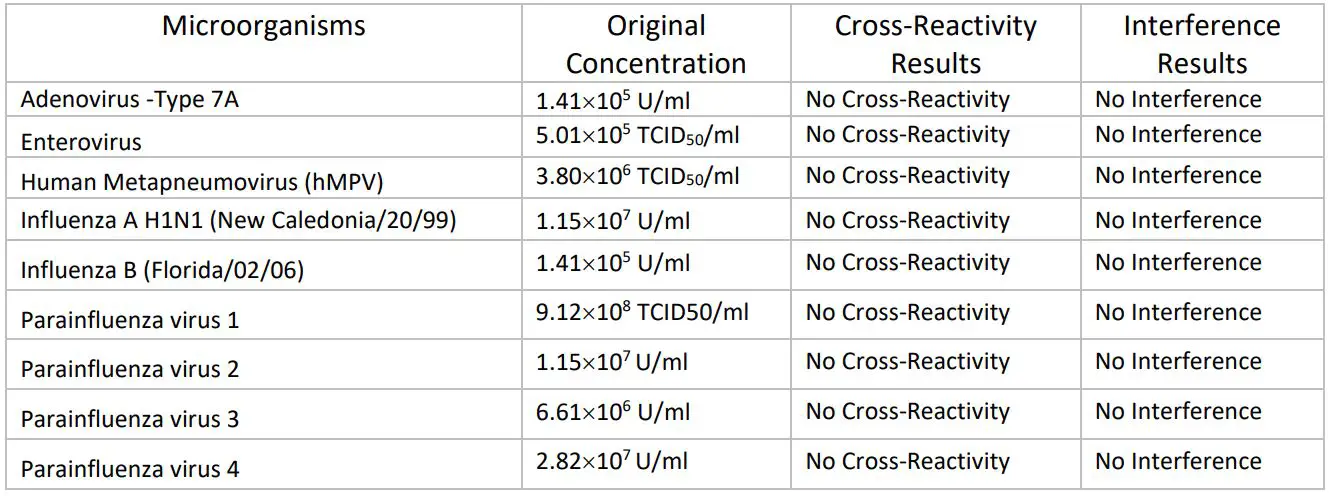
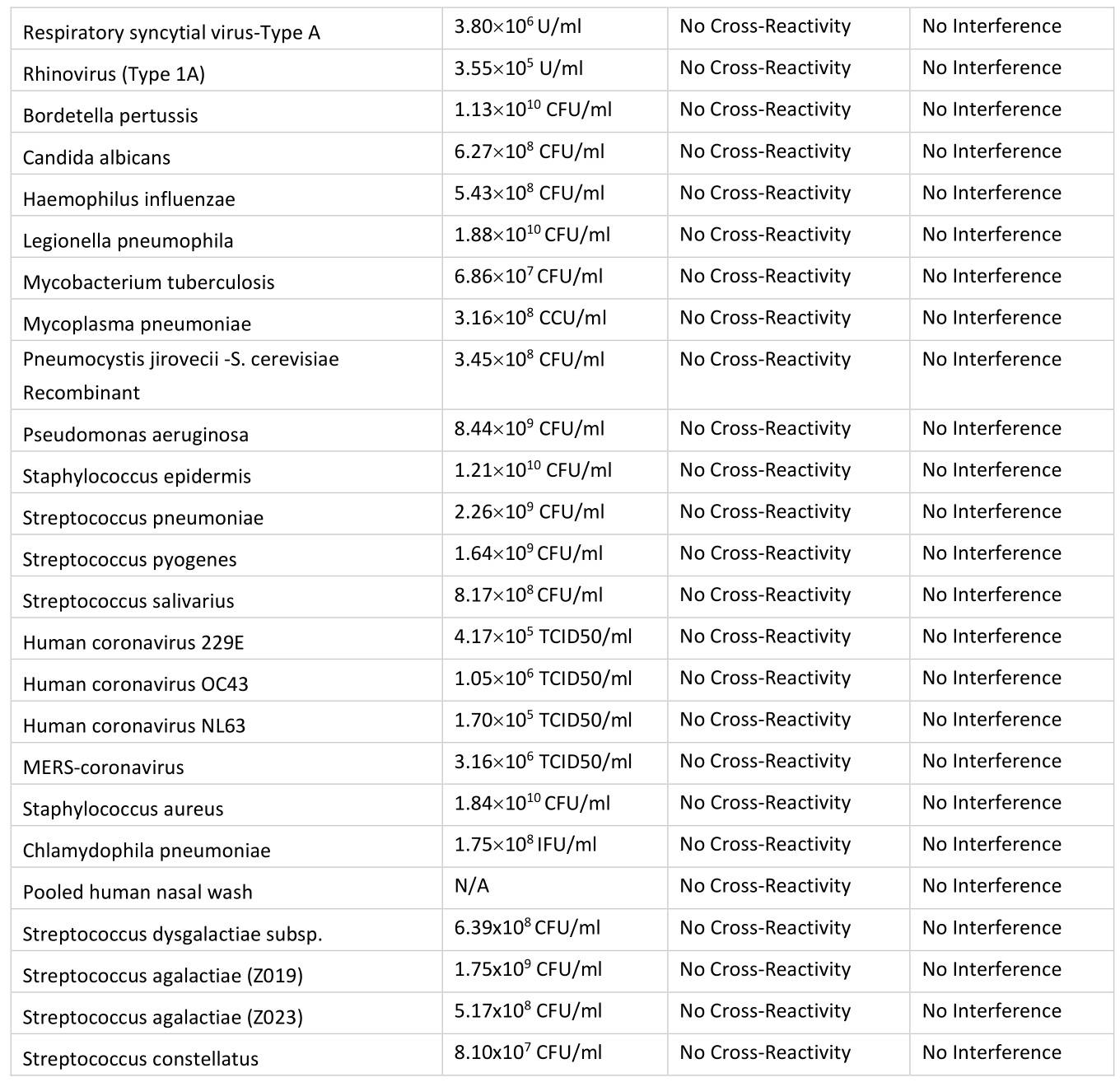
To estimate the likelihood of cross-reactivity with SARS-CoV-2 virus in the presence of organisms that were not available for wet testing, in silico analysis using the Basic Local Alignment Search Tool (BLAST) managed by the National Center for Biotechnology Information (NCBI) was used to assess the degree of protein sequence homology.
- For Human Coronavirus HKU1, due to the wet testing wasn’t available, in silico analysis using the Basic Local Alignment Search Tool (BLAST) was used to assess the degree of protein sequence homology. BLAST results compared 80 Human Coronavirus HKU1 nucleocapsid protein sequence IDs with SARS-COV-2 nucleocapsid protein. Sequence ID AXT92466.1 had the highest alignment score and was found to be 38.92 % homologous across 76% of the sequences, this is relatively low but cross-reactivity cannot be fully ruled out.
- For SARS-Coronavirus, due to the wet testing wasn’t available, in silico analysis using the Basic Local Alignment Search Tool (BLAST) was used to assess the degree of protein sequence homology. BLAST results compared 51 SARS-Coronavirus nucleocapsid protein sequence IDs with SARS-COV-2 nucleocapsid protein, all of them showed high homology. Sequence ID AAR87518.1 had the highest alignment score and was found to be 90.76 % homologous across 100% of the sequences. Thus, the cross-reactivity cannot be ruled out.
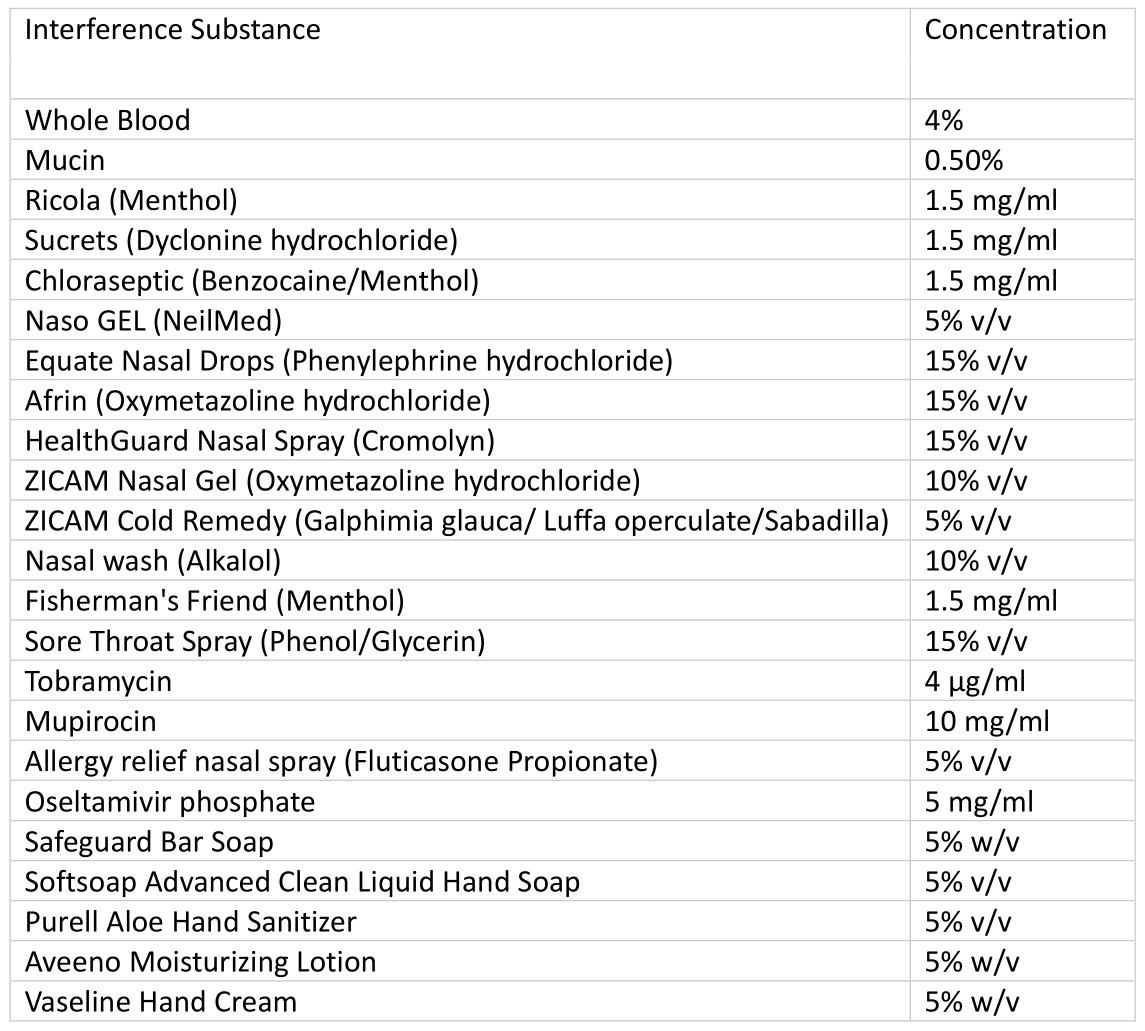
c) Endogenous Interference Substances Study
The endogenous interference substances were evaluated with the Advin COVID-19 Antigen Test @Home Device at the concentrations listed below. There was no cross reactivity observed with those interference substances at the indicated concentrations.
d) High-dose hook effect
The original stock solution of heat-inactivated SARS-CoV-2 virus (ZeptoMetrix 0810587CFHI, USAWA1/2020, Conc. 9.55×10⁶ TCID50/ml) was tested. There was no high dose Hook effect observed.
Clinical Evaluation
A prospective, all-comer study was completed at six (6) sites in the United States for the clinical performance of the Advin COVID-19 Antigen Test @Home. Symptomatic subjects at age 2 or above who presented symptoms onset within seven (7) days were approached and enrolled for the clinical study.
The subject aged 14 years or older either self-collected the anterior nasal specimen and performed the test using Advin COVID-19 Antigen Test @Home, or had their companion collected and performed the test. For subjects aged two (2) to thirteen (13), a parent/legal guardian collected the nasal specimen from these subjects. The person that collected the nasal specimen for the Advin COVID-19 Antigen Test @Home then performed the test following the Quick Reference Guide provided within the test kit.
An additional nasal swab was also collected from each subject by site
healthcare professional for reference testing with highly sensitive FDA
Emergency Use Authorized Real-time Polymerase Chain Reaction (RT-PCR) assay to
determine the clinical performance.
As shown, the positive percent agreement (PPA) is 82.5% and the negative
percent agreement (NPA) is 100.0% with the 95% confidence interval bounds of
70.6% to 90.2% for the PPA and 99.2% to 100% for the NPA, respectively.
Advin COVID-19 Antigen Test @Home Performance Against the Comparator Method

aSARS-CoV-2 was not detected in three False Negative specimens on a different high sensitivity, FDA EUA authorized RT-PCR Method.
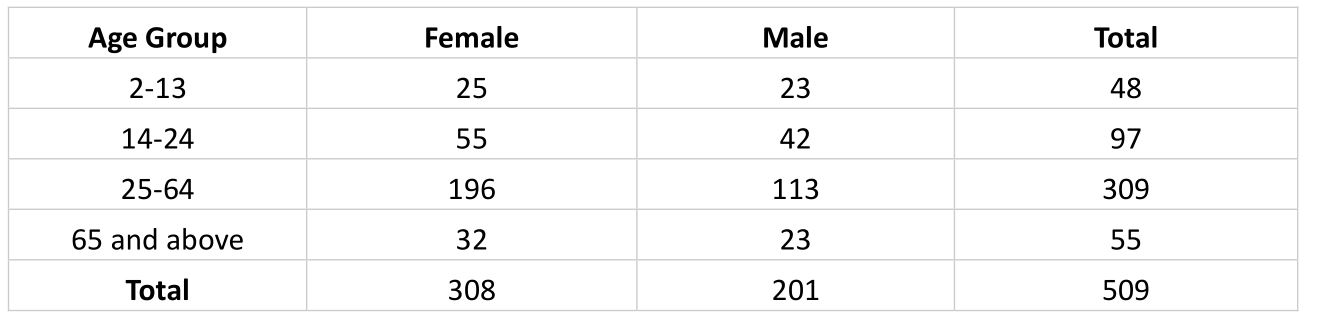
Age and Gender Distribution for Subjects
Overall Performance Obtained with the Advin COVID-19 Antigen Test @Home against the Comparator Method, Stratified by Patient Age

Performance for Symptomatic Subjects by Days Since Symptom Onset

Technical Support
For questions, or to report a problem, please call Technical Support at
858-866-8382
(Available Hours: Mon. to Fri.: 9 a.m. – 5 p.m. PST) or
support@advinbio.com
Symbols

Version: DRAFT 01.09.2023
Advin Biotech, Inc.
10237 Flanders Ct. San Diego, CA 922121
USA
References
- Coronavirus Disease 2019 (COVID-19) | CDC
- Medical Devices | FDA
- 800-222-1222" class="nturl" > Poison Control | Call Poison Help Centers Now 1-800-222-1222
Read User Manual Online (PDF format)
Read User Manual Online (PDF format) >>